Fake images of Trump with underage girls that we've debunked
Feb. 14th, 2026 07:00 pm![[syndicated profile]](https://www.dreamwidth.org/img/silk/identity/feed.png) snopes_feed
snopes_feedAI-generated or otherwise altered images of the U.S. president swirled online as more files regarding late sex offender Jeffrey Epstein emerged.
snopes_feedsnopes_feedsnopes_feedsnopes_feedsnopes_feedsnopes_feedsnopes_feedsnopes_feedsnopes_feedsnopes_feedearthobservatory_iod_feed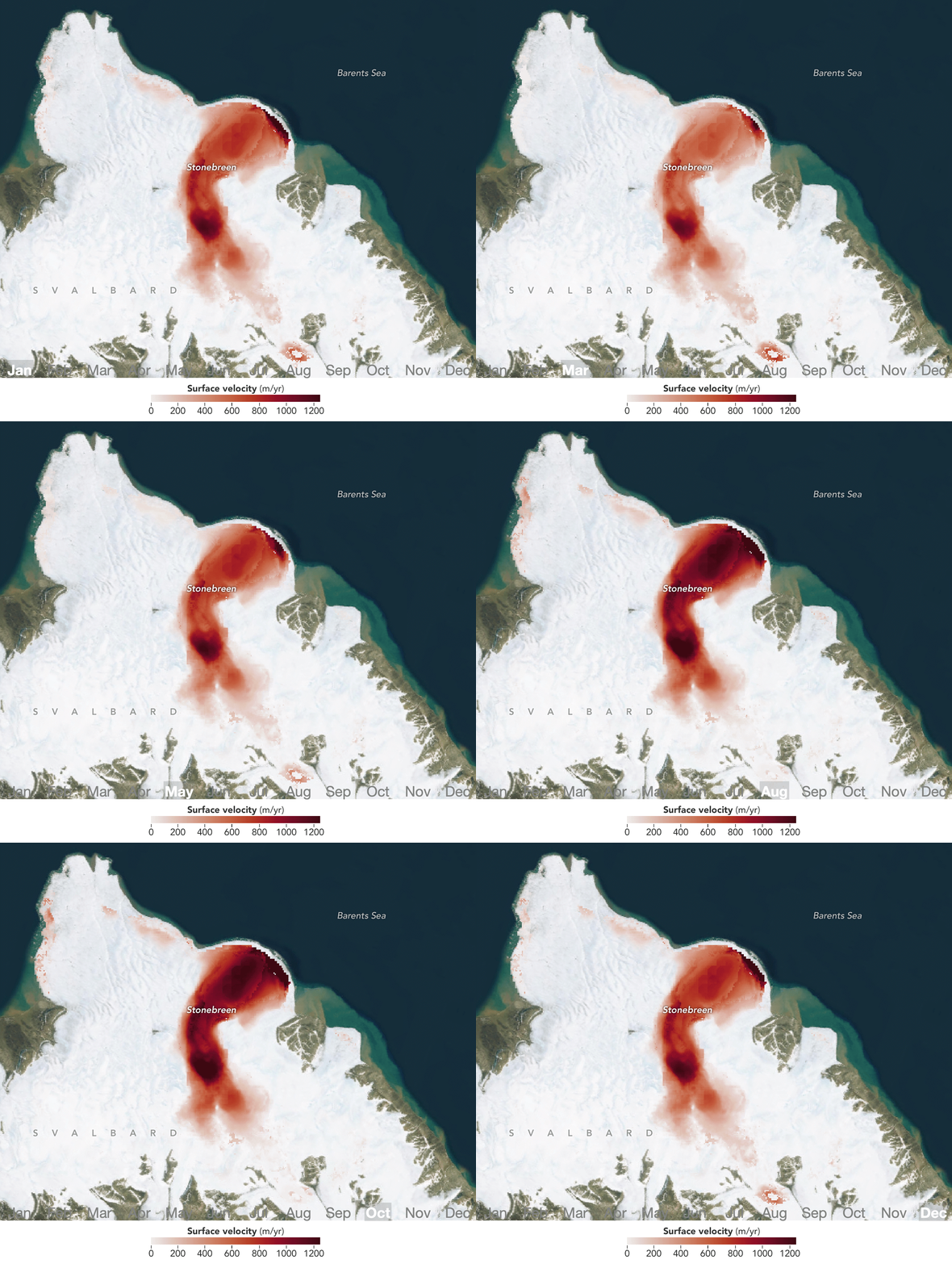
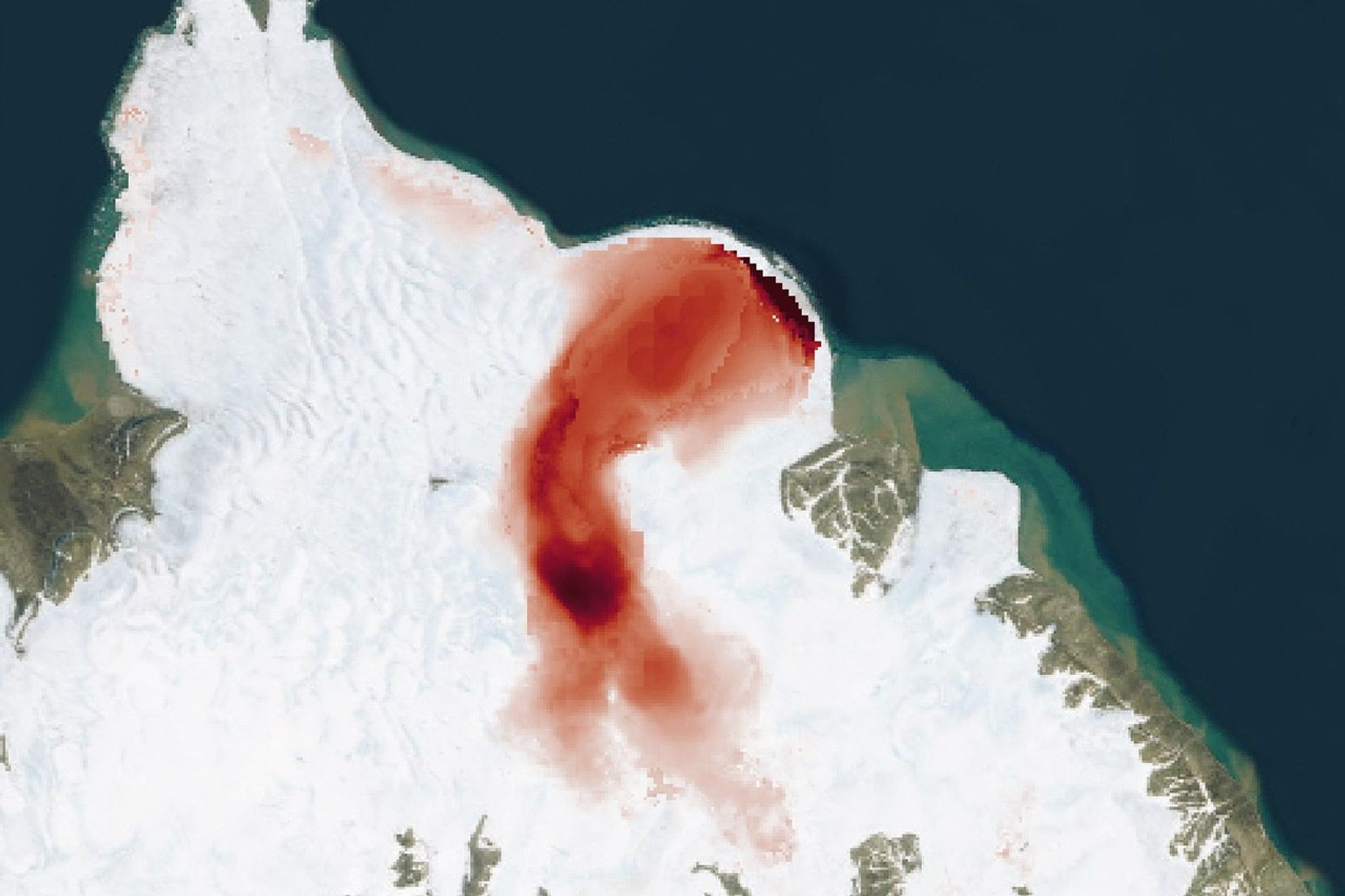
Edgeøya, an island in the southeastern part of the Svalbard archipelago, is defined by stark Arctic expanses and rugged terrain. Still, even here—halfway between mainland Norway and the North Pole—life persists, from mosses to polar bears. The southern lobe of Stonebreen, a glacier that flows from the Edgeøyjøkulen ice cap into the Barents Sea, gives the landscape a different kind of life. Its ice pulses like a heart.
The apparent heartbeat comes from the ice speeding up and slowing down with the seasons. This animation, based on satellite data collected between 2014 and 2022, shows how fast the glacier’s surface ice moves on average during each month. In winter and spring, the ice flows relatively slowly (pink); by late summer, it races toward the sea at speeds exceeding 1,200 meters per year in places (dark red). In summer 2020, speeds reached as high as 2,590 meters per year (23 feet per day).
In general, summer speedups are caused by meltwater that percolates from the surface down to the base of the glacier, where the ice sits on rock, explained Chad Greene, a glaciologist at NASA’s Jet Propulsion Laboratory (JPL). “When the base of a glacier becomes inundated with meltwater, water pressure at the base increases and allows the glacier to slide more easily,” he said.
Data for the animation are from the ITS_LIVE project, developed at JPL, which uses an algorithm to detect glacier speed based on surface features visible in optical and radar satellite images. In 2025, Greene and JPL colleague Alex Gardner used ITS_LIVE data to analyze the seasonal variability of hundreds of thousands of glaciers across the planet, including Stonebreen.
Stonebreen is a surging glacier, a type that cycles between stretches of relatively slow movement and sudden bursts of speed when ice can flow several times faster than usual. These surges can last anywhere from months to years. Globally, only about 1 percent of glaciers are surge-type, though in Svalbard, they are relatively widespread.
Before 2023, Stonebreen spent several years surging at high speeds after melting along its front likely destabilized the glacier, according to Gardner. Even during this surging period, the ice followed a seasonal rhythm—speeding up in summer and slowing through the winter—all while continuing its faster overall flow toward the Barents Sea.
Since 2023, however, the glacier has all but slowed to a halt, with only a short stretch in the summer when meltwater causes Stonebreen to glide across the ground. It has entered a phase of quiet, or “quiescence,” which is a normal part of the cycle for surge-type glaciers.
These seasonal heartbeat-like pulses and longer-term variations in ice flow at Stonebreen and other glaciers worldwide can be explored using the ITS_LIVE app.
Maps courtesy of Chad Greene and Alex Gardner, NASA/JPL, using data from the NASA MEaSUREs project ITS_LIVE. Story by Kathryn Hansen.
Stay up-to-date with the latest content from NASA as we explore the universe and discover more about our home planet.
From Alaska’s Saint Elias Mountains to Pakistan’s Karakoram, glaciers speed up and slow down with the seasons.
A landmass that was once encased in the ice of the Alsek Glacier is now surrounded by water.
Satellite data show that Arctic sea ice likely reached its annual minimum extent on September 10, 2025.
The post Stonebreen’s Beating Heart appeared first on NASA Science.
snopes_feedsnopes_feedsnopes_feedsnopes_feedsnopes_feedsnopes_feedsnopes_feedsnopes_feedearthobservatory_iod_feed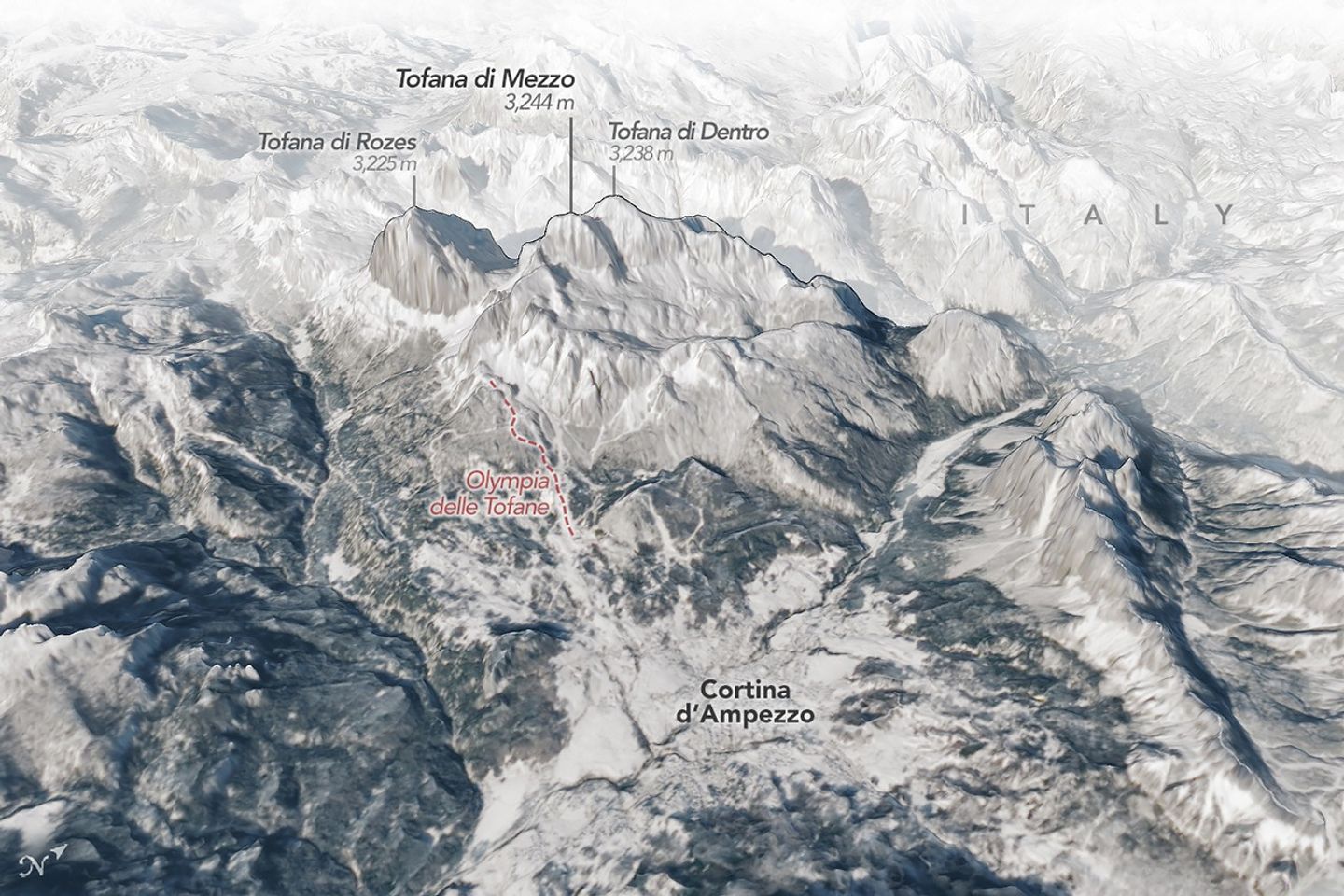
Nestled among high snowy peaks in northern Italy, Cortina d’Ampezzo is hosting athletes in the 2026 Winter Olympics and Paralympics who are skiing, sliding, and curling toward a spot on the podium. The scenic mountain town is the co-host, along with Milan, of the international sporting extravaganza.
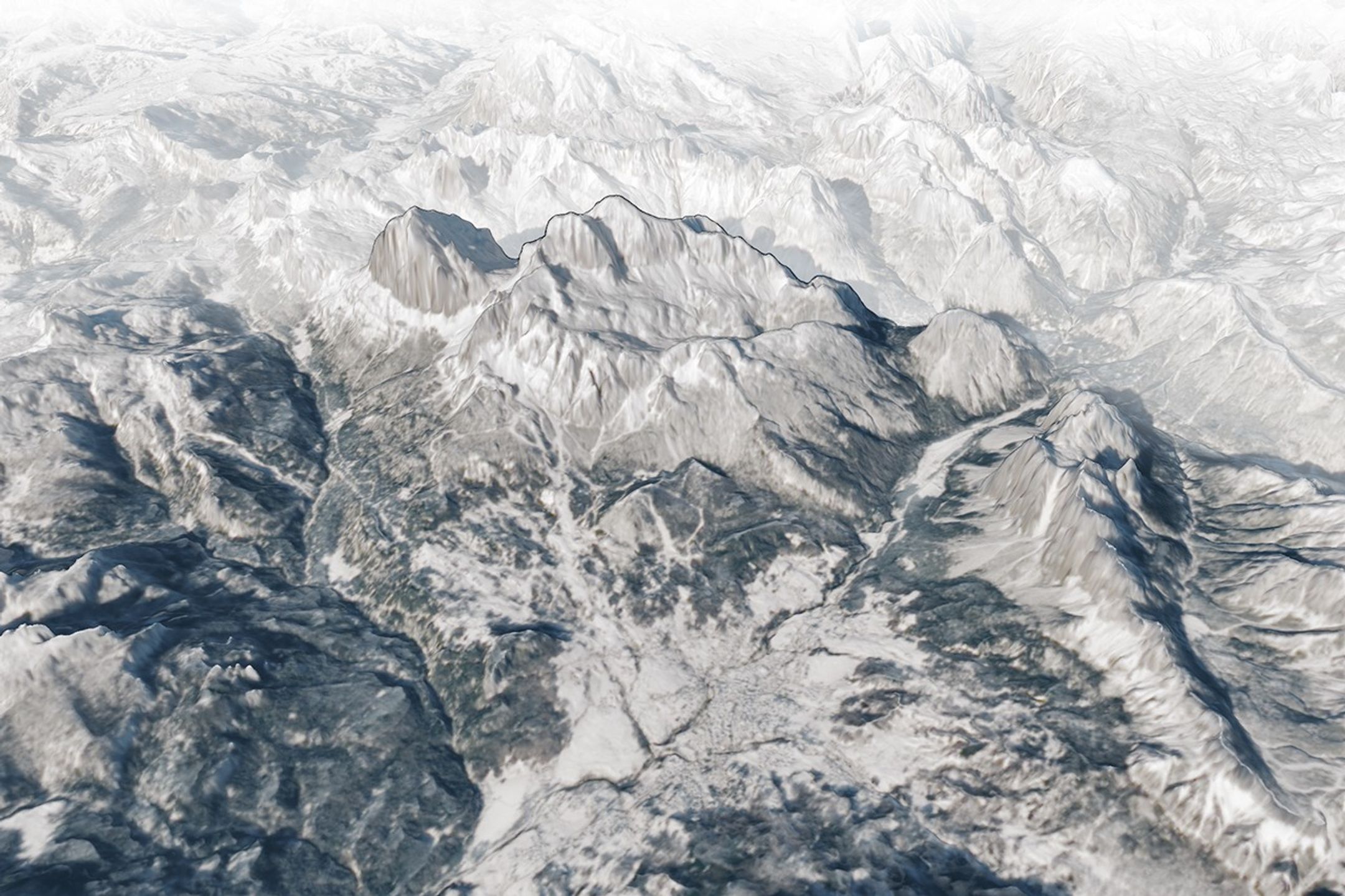
Cortina sits within the Dolomites, a mountain range in the northern Italian Alps known for its sheer cliffs, rock pinnacles, tall peaks, and deep, narrow valleys. In this three-dimensional oblique map, several peaks over 3,000 meters (10,000 feet) tall rise above the town. To create the map, an image acquired with the OLI (Operational Land Imager) on Landsat 8 on January 27, 2026, was overlaid on a digital elevation model.
Tofana di Mezzo, the third-highest peak in the Dolomites at 3,244 meters (10,643 feet), is the site of the Tofane Alpine Skiing Centre, the venue for the Olympic women’s Alpine skiing and all Paralympic skiing events. Competitors on the Olympia delle Tofane course descend 750 meters (2,460 feet), reaching high speeds and catching big air along the way. A highlight is the steep, 33-degree drop through the Tofana Schuss, a chute bounded by tall rock walls near the top of the course.
More adrenaline-filled races are taking place at the Cortina Sliding Centre, the venue for bobsled, luge, and skeleton events. Athletes are competing on a rebuilt version of the track used in the 1956 Olympics, hosted by Cortina. And curlers, trading speed for strategy, are going for gold at the Cortina Curling Olympic Stadium, built for the 1956 Olympic figure skating competition and opening ceremony. (There is indeed a theme: almost all of the 2026 Games are being held in existing or refurbished facilities.)
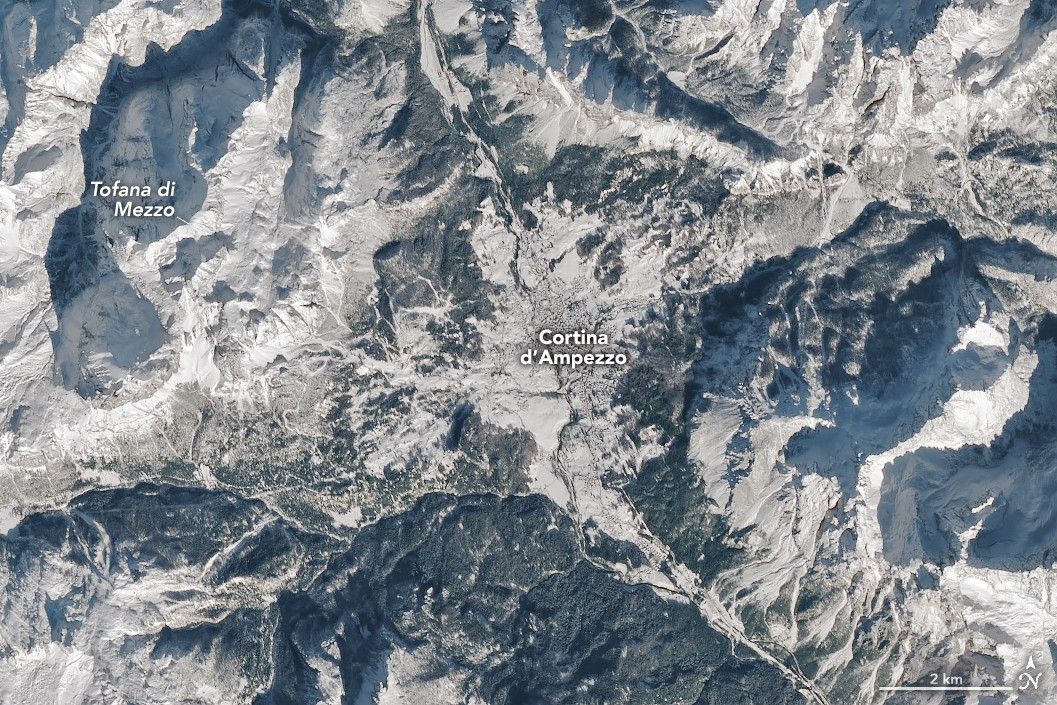
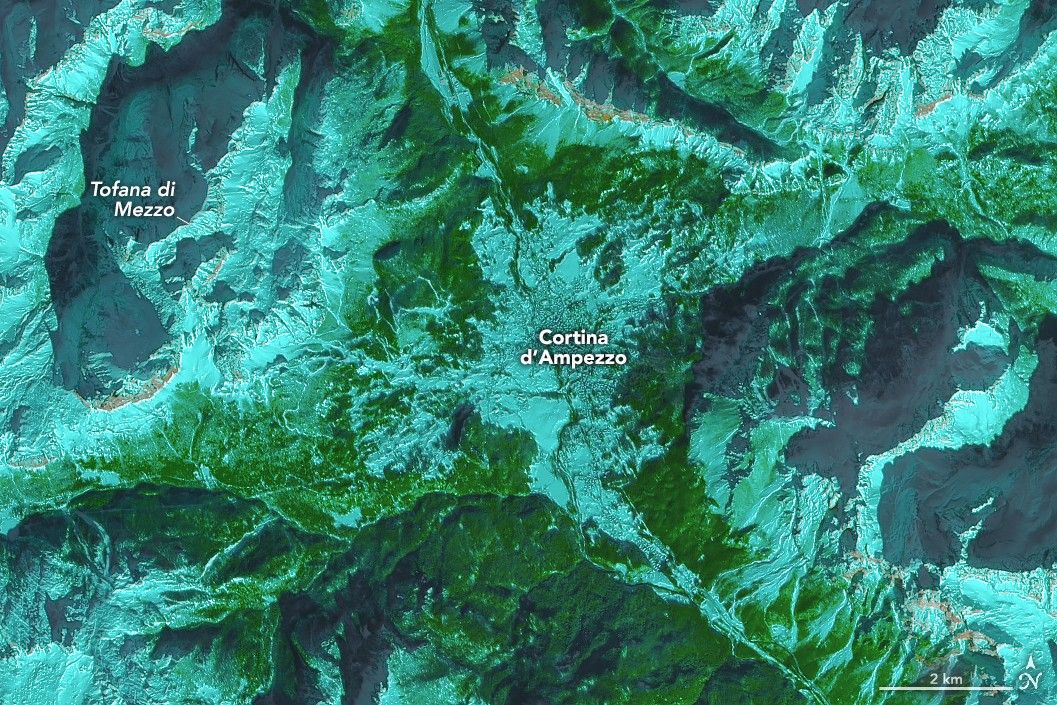
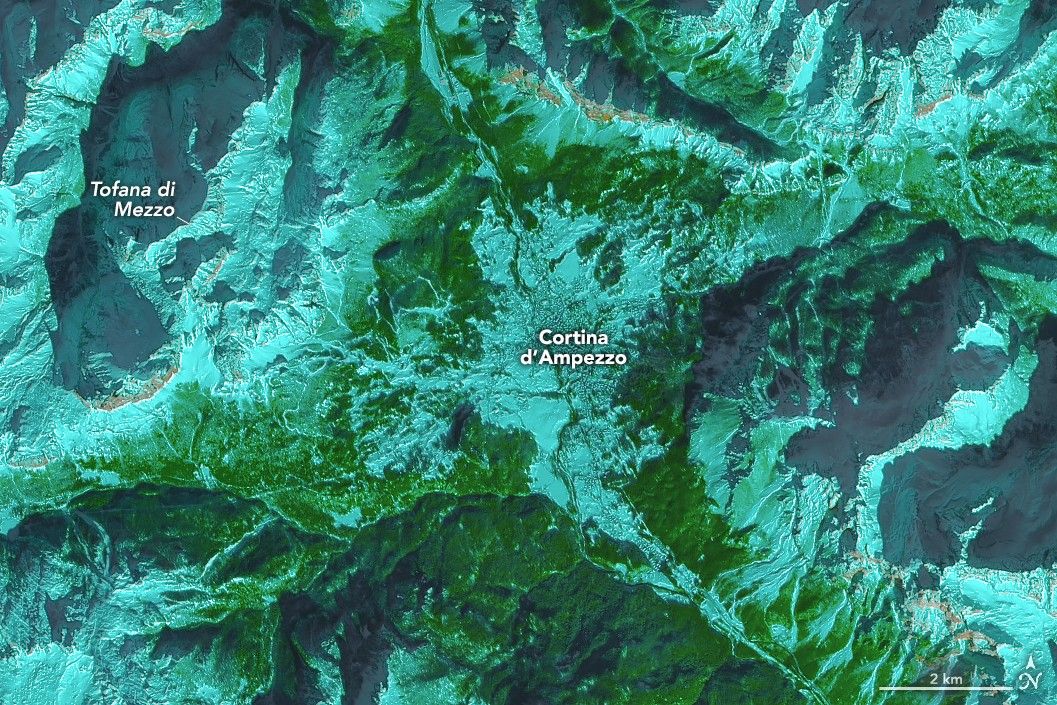
January 27, 2026
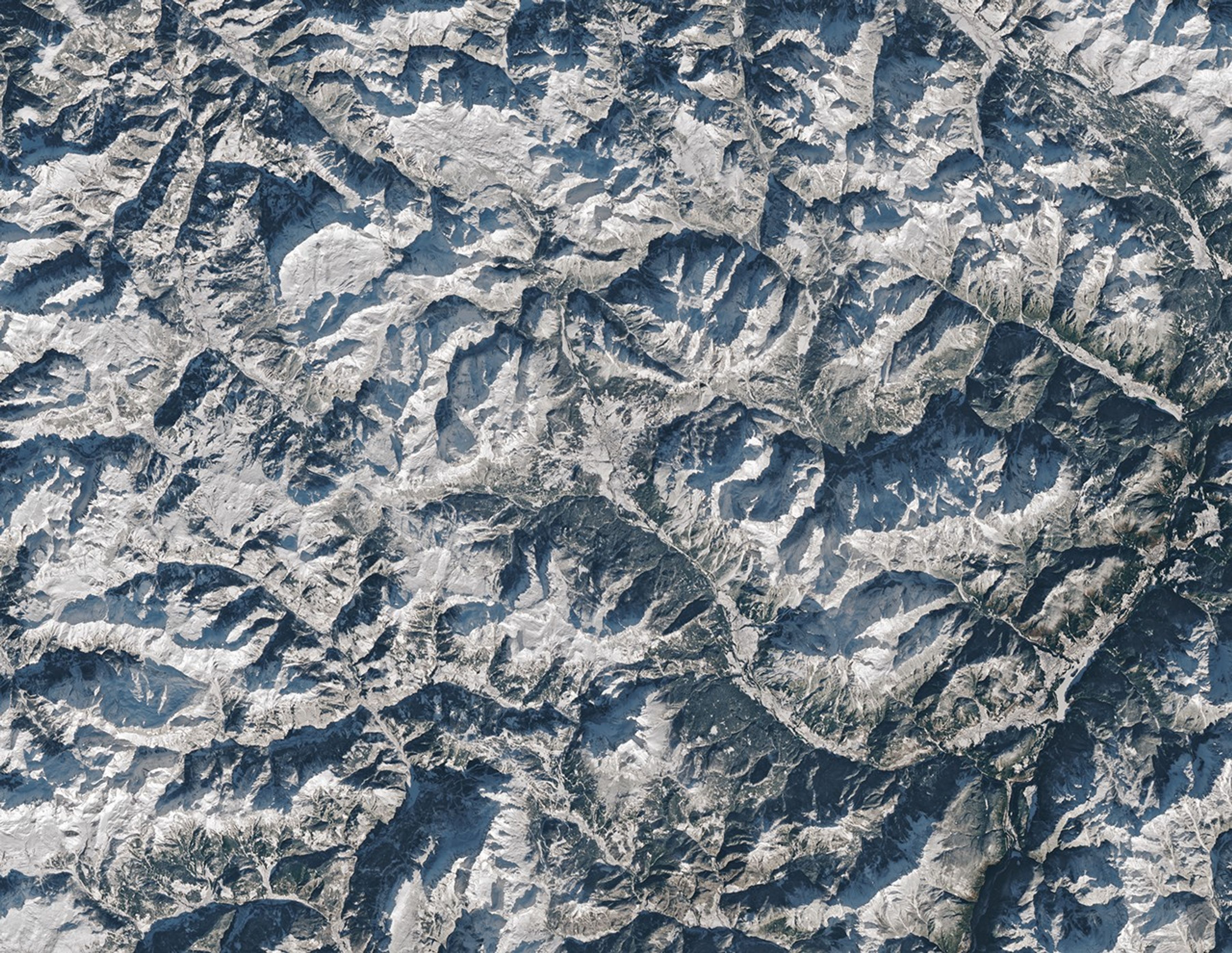
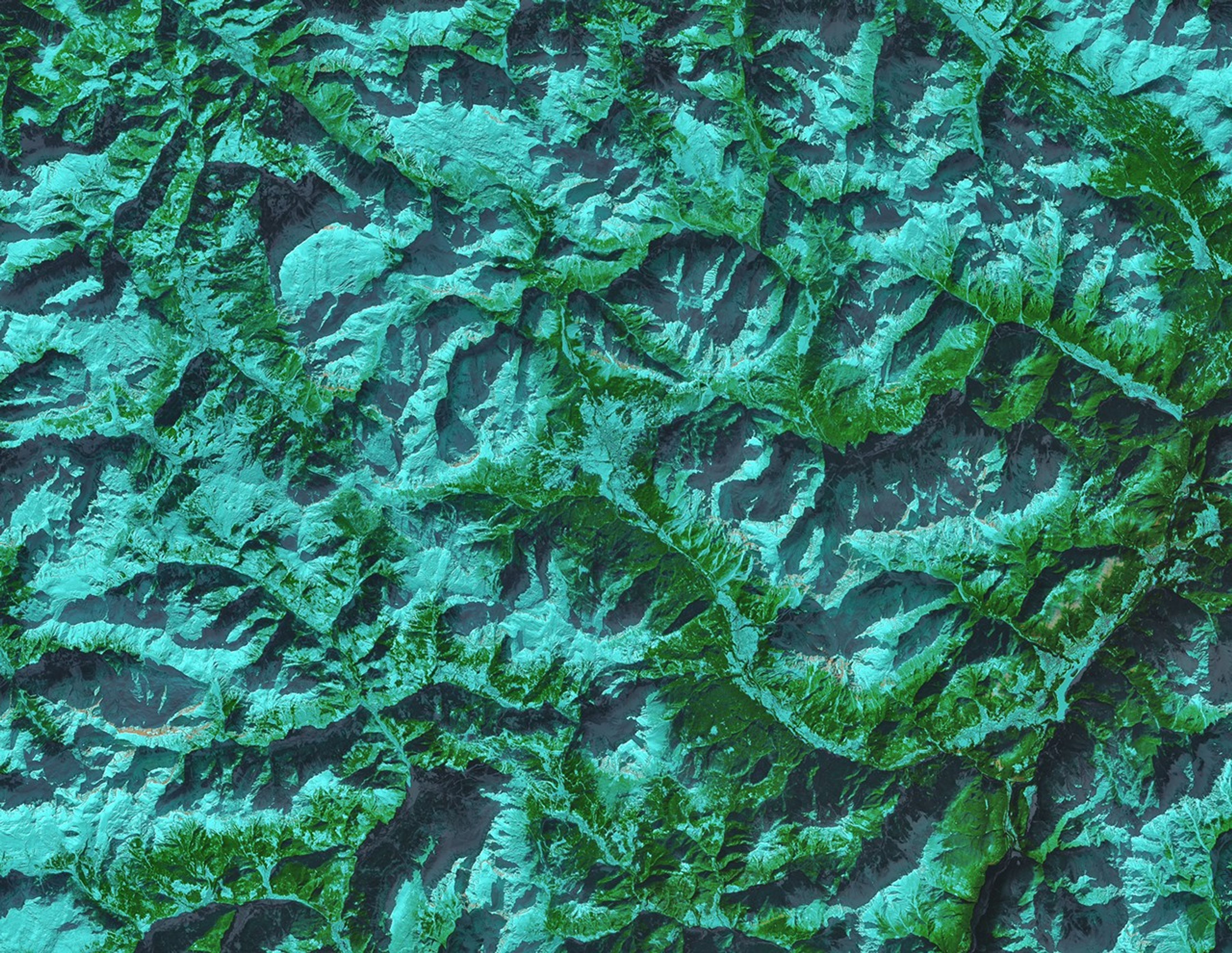
These Landsat images show Cortina and its surrounding alpine terrain in natural color and false color. The band combination (6-5-4) highlights areas of snow (light blue), while steep, mostly snow-free cliffs stand out as areas of light brown, and forests appear green.
Locations across the Italian Alps join Cortina in hosting the snow sports, which also include cross-country skiing, ski jumping, ski mountaineering, and snowboarding. As with many past Olympics, the 2026 Winter Games are manufacturing snow at the various venues to ensure consistent conditions. New high-elevation reservoirs were created to store water for snowmaking, according to reports. Automated systems are being used to limit snow production to the minimum amount required, and most snowmaking operations are being powered by renewable energy, the International Olympic Committee said.
Snowfall in northern Italy was below average at the start of the season, but a storm on February 3—three days before the opening ceremony—eased some of the need for snowmaking. Still, snow coverage and the ability of Winter Olympic venues to maintain consistent conditions are areas of concern as global temperatures rise. Researchers studying the issue have suggested several ways to address this, including holding competitions at higher elevations, choosing regional or multi-country hosts, and shifting the Paralympic Games from early March to January or February when it’s typically colder and snowier.
NASA Earth Observatory images by Michala Garrison, using Landsat data from the U.S. Geological Survey and elevation data from TINITALY. Story by Lindsey Doermann.
Stay up-to-date with the latest content from NASA as we explore the universe and discover more about our home planet.

About 2,900 Olympic athletes have converged on northern Italy to sort out who is the GOAT—or perhaps the stoat.
Very wet—but very warm—weather in the western U.S. has left many mountainous regions looking at substantial snowpack deficits.
Satellites observed a frozen landscape across much of the country after a massive winter storm.
The post Reaching Top Speed in the Dolomites appeared first on NASA Science.
snopes_feed - Fake images of Trump with underage girls that we've debunkedsnopes_feed - Posts falsely claim photo shows Tumbler Ridge shooter Jesse Van Rootselaarsnopes_feed - Does Pam Bondi have Israeli passport? Here's the truthsnopes_feed - Frida Baby used sexual innuendo in its marketing. It sparked an uproarsnopes_feed - Does this image show 14-year-old Pam Bondi with Trump? Not so fastsnopes_feed - Did Nick Fuentes say 'all women' should be 'sent to the gulags'?snopes_feed - Trump's White House ballroom project was allegedly scrapped. We broke down real statussnopes_feed - Why some social media users incorrectly think greeting card companies invented Valentine's Daysnopes_feed - Beware alleged photo of Hakeem Jeffries with Epsteinsnopes_feed - Did other countries release unredacted Epstein files? Claim lacks evidenceearthobservatory_iod_feed - Stonebreen’s Beating Heartsnopes_feed - Image doesn't depict attacker in Canadian mass shooting with assault riflesnopes_feed - Contextualizing claims school photo company Lifetouch is in Epstein filessnopes_feed - What we know about fatal shooting of Lucy Harrison after 'big argument' with dad about Trumpsnopes_feed - Was Ivanka Trump's passport seized? Look out for sensational videos making claimsnopes_feed - Epstein ordered sulfuric acid on same day FBI opened probe. Files show mundane reasonsnopes_feed - Have reservations about rumored photo of Obama eating with Epsteinsnopes_feed - Real photo shows Steve Bannon and Epstein taking mirror selfiesnopes_feed - Don't be fooled by Bad Bunny video claiming death threats shortened Super Bowl halftime showearthobservatory_iod_feed - Reaching Top Speed in the Dolomites![[personal profile]](https://www.dreamwidth.org/img/silk/identity/user.png) carisma_sensei
carisma_sensei